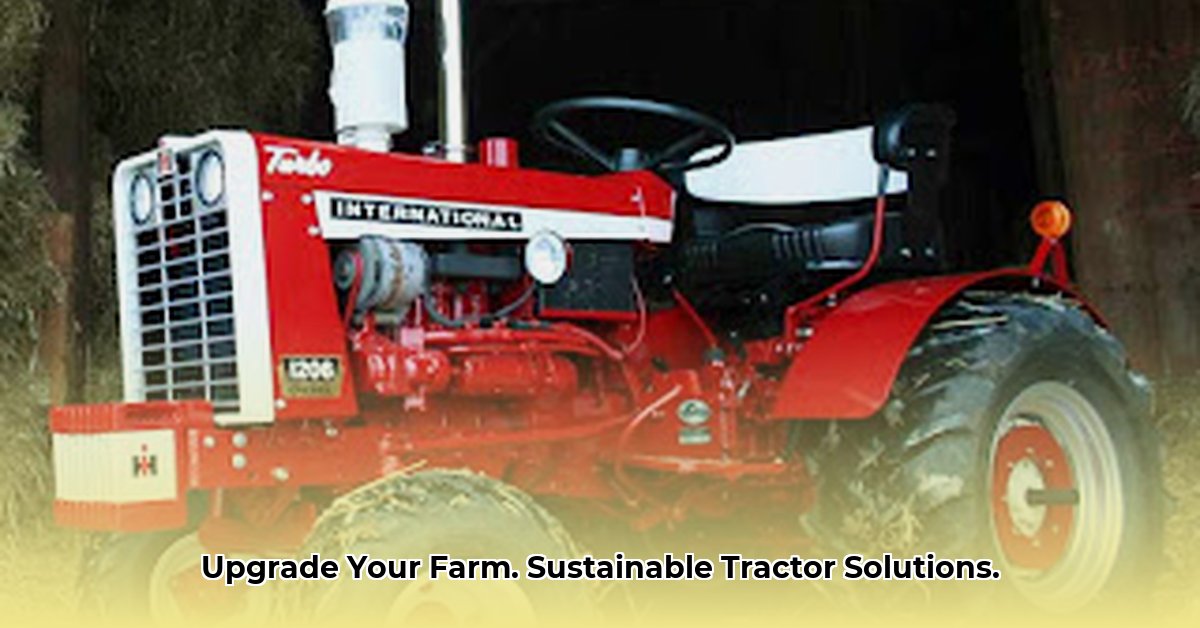
Custom Tractor Modifications: Revving Up Sustainable Farming
Forget your grandpa's tractor. Modern sustainable agriculture demands precision and efficiency, and custom tractor modifications are delivering. This isn't just about adding bells and whistles; it's about optimizing your operations for maximum yield and minimal environmental impact. This article explores how strategic customization can transform your farming practices. We'll examine various modifications, analyze their benefits and drawbacks, and provide actionable steps for farmers, manufacturers, and government agencies. To learn more about choosing the right tractor size, check out this helpful guide: Tractor Sizing Guide.
Tailoring Your Tractor: Types of Modifications
Farmers are increasingly recognizing the value of adapting existing equipment instead of starting from scratch. Customizing a tractor allows for a tailored solution that precisely addresses farm-specific challenges, mirroring the precision needed for optimal yields and environmental stewardship.
Engine Overhauls for Efficiency
Fuel efficiency is a major concern. Engine modifications, such as optimizing engine settings or using alternative fuels like biodiesel, can significantly reduce fuel consumption. "Reducing fuel consumption by 15% can translate to substantial savings over the growing season," says Dr. Anya Sharma, Agricultural Engineer at the University of California, Davis. This directly impacts profitability while reducing the farm's carbon footprint. Is it time to re-evaluate your fuel costs?
Precision Farming: Tech Integration for Targeted Actions
GPS-guided systems and advanced sensors usher in an era of precision farming. Targeted application of inputs like fertilizers and pesticides minimizes waste and environmental impact. "Precision farming techniques have shown a 20% increase in fertilizer efficiency in our trials," notes Professor Ben Miller, Department of Agricultural Engineering, Purdue University. This equates to substantial cost savings and reduced environmental damage. Have you considered the potential savings from reduced resource waste?
Sensor Networks: Gathering Real-Time Data for Informed Decisions
Real-time data on soil conditions, moisture levels, and plant health empowers informed decision-making. Sensors deliver crucial information, allowing for timely adjustments to irrigation, fertilization, and pest control strategies. "Real-time monitoring allows for faster responses to environmental changes, leading to improved crop yields," explains Dr. Emily Carter, Soil Scientist, USDA Agricultural Research Service.
Smart Technology: AI-Powered Farming Systems
AI is rapidly transforming agriculture. AI-powered systems analyze sensor data, predict potential problems, and optimize farming practices. This predictive capability allows farmers to proactively address potential issues, mitigating risks and maximizing yield. How can AI assist in streamlining your farm's operation?
Custom Attachments: Tools for Every Task
Specialized attachments enhance tractor versatility, allowing farmers to adapt to a broader range of tasks. Whether it's a specialized planter or a unique harvesting tool, custom attachments improve efficiency and productivity. What specific tasks could custom attachments optimize on your farm?
The Upsides and Downsides of Custom Tractor Modifications
While custom modifications offer significant advantages, it's crucial to understand the potential drawbacks.
| Advantages | Disadvantages |
|---|---|
| Increased efficiency and productivity | Higher upfront investment costs |
| Reduced environmental impact | Potential for increased maintenance needs |
| Improved precision and resource management | Need for specialized skills and knowledge |
| Enhanced versatility | Possible compatibility issues with existing tech |
| Tailored solutions for unique needs | Difficulty in finding technicians for repairs |
Actionable Steps for Farmers: Making it Work on Your Farm
- Identify your needs: Analyze your farming practices, pinpointing bottlenecks hindering efficiency or sustainability.
- Research your options: Explore various modifications, consulting with other farmers and agricultural engineers.
- Analyze costs and benefits: Evaluate the return on investment (ROI) for each modification, considering both short-term and long-term implications.
- Seek expert advice: Consult with agricultural engineers or experienced mechanics for guidance and support before implementation.
Actionable Steps for Manufacturers & Government Agencies: A Collaborative Effort
Manufacturers should prioritize designing tractors with modular components for easier technology integration. Governments can incentivize sustainable agricultural technology adoption through subsidies or tax breaks and streamline regulations for new modifications. A collaborative approach drives innovation and broader adoption.
The Future of Custom Tractors in Sustainable Agriculture
The demand for customized tractors is rapidly increasing. As technology advances and sustainability becomes paramount, the role of custom modifications in the future of agriculture will undoubtedly expand. This trend reflects a shift towards personalized, efficient, and environmentally conscious farming practices.
How to Choose the Best Custom Tractor Modifications for Sustainable Organic Farming
This section focuses on specific modifications and their impact on sustainable organic farming.
Lighting Upgrades: Seeing is Believing
Upgrading to energy-efficient LED lights improves nighttime visibility and safety, a crucial factor for long working days.
Hydraulic System Enhancements: Power and Precision
Hydraulic system upgrades increase power and versatility, allowing efficient utilization of diverse implements.
Operator Comfort: A Happy Farmer is a Productive Farmer
Ergonomic seating significantly reduces fatigue and improves operator well-being, boosting productivity.
Storage Solutions: Organization is Key
Custom storage solutions maintain order and improve workflow efficiency, saving valuable time.
Tire Optimization & Weight Management: Stability and Soil Health
Optimized tires and weight distribution enhance traction, reduce soil compaction, and minimize environmental impact.
Smart Technology Integration: Data-Driven Decisions
Integration of GPS and other smart technologies improves precision, resource management, and yields while minimizing environmental impact.
Step-by-Step Guide to Choosing the Best Modifications
- Assess your needs: Determine the most frequent tasks.
- Research available modifications: Gather information about various options.
- Prioritize sustainability: Choose sustainable materials and manufacturing processes.
- Consult with experts: Seek professional advice before implementation.
- Implement gradually: Start with the most crucial modifications.
- Monitor and adapt: Track progress and make adjustments as needed.
Pros and Cons of Custom Tractor Modifications
| Feature | Pros | Cons |
|---|---|---|
| LED Lighting Upgrades | Increased visibility, energy efficiency, improved safety | Higher upfront cost |
| Hydraulic System Upgrades | Increased power, versatility, efficiency | Higher complexity, potential for leaks |
| Operator Comfort Upgrades | Reduced fatigue, improved health, increased productivity | Higher initial cost |
| Smart Technology Integration | Improved precision, efficient resource management, increased yields | Higher implementation cost, need for technical expertise |